How Cannabis Topicals Help with Recovery After a Workout in the West Bronx
Introduction
The first thing to ask when contemplating cannabis topicals after a workout in the West Bronx is how they would align with your routine. While creams, balms, and roll-ons each have distinct textures and ways of use, the label offers the ingredients, guidelines, and safety information to examine before choosing a product.
Key Takeaways
- Cannabis topicals can fit into an after-workout skincare routine, but this guide can’t say they help with recovery.
- A higher THC/CBD number doesn’t automatically mean a better fit; consider the formula’s ingredients and directions alongside its laboratory results.
- Introduce a topical as you would a new body cream, testing a small area before making it part of your routine.
What Are Cannabis Topicals?
Topical cannabis products include cannabinoids such as THC or CBD, which are applied directly to the skin.
Note that topicals are different from transdermal patches. However, depending on the topical formula, some of those compounds can also pass through the skin and reach the bloodstream. Researchers note that published studies on how cannabinoids move through the skin are still limited.
How Do People Use Cannabis Topicals After a Workout?
- First, go wash up. You can shower at the gym or clean up at home after a workout or a stroll along Aqueduct Walk.
- Gently pat the clean skin dry with a towel before applying your topical.
- See how much you should use. New York’s Office of Cannabis Management (OCM) uses a dime-sized dab of lotion as an example; follow the amount your package recommends.
- Spread it over the skin you want to cover, such as your calf or shoulder, then gently rub it in as directed. Wash your hands when you’re done.

Cream, Lotion, Balm or Roll-On: Which Format Fits Your Routine?
Creams and lotions are often emulsions, with emulsifiers keeping oil and water mixed; their thickness varies with the formula.
| Format | Texture | Good to Know |
|---|---|---|
| Lotion | Thin and spreadable | Easier to spread across an area such as your calf. |
| Cream | Thicker than lotion | Feels richer as you smooth it over your skin. |
| Balm | Waxy or paste-like | Useful for small areas, though it may leave a noticeable coating. |
| Roll-on | Liquid or gel | The roller spreads the formula with less hand contact. |
Your body lotion may already contain occlusives, which form a film that slows moisture loss from the skin. A waxy cannabis balm adds another layer, so consider how that coating will feel once you pull your leggings or T-shirt back on.
These texture differences also apply when comparing CBD skin care options.
How Do You Read a Cannabis Topical Label in New York?
Pick up the tube or bottle and turn it around; for a jar or tin, check the sides and base, along with any outer box.
- Look for New York’s universal symbol. It identifies the product as part of the state’s regulated cannabis market.
- Scan the product’s QR code. The QR Code will take you to its Certificate of Analysis (COA), the laboratory report where you can check the test results. We have another guide that explains why lab-tested cannabis matters.
- Check the milligrams. Potency describes cannabinoid content, such as THC and CBD. Check the “per serving” and “per package” carefully, since they describe different quantities.
- Check allergens and the full ingredient list. Look for declared allergens, then check for oils, fragrances, or other ingredients you already know your skin reacts to.
- Read the directions and warnings together. Check how to apply and store the formula, along with precautions about pregnancy or nursing, children, and pets, and the instruction “For topical use only. Do not eat or smoke.”
How Do You Use a Cannabis Topical Safely?
- Try a small spot first. A home patch test means applying the formula to an area like your inner arm; AAD’s skincare guidance recommends observing it over seven to ten days.
- Apply with care. Avoid eyes, cuts, and scrapes, and wash your hands afterward. If redness, itching, or swelling develops, gently wash the product off, stop using it, and ask a doctor or pharmacist.
- Close it up and lock it away, out of reach of children and pets. Cannabis topicals are for adults 21 and over.

Can You Get Cannabis Topicals Delivered in the West Bronx?
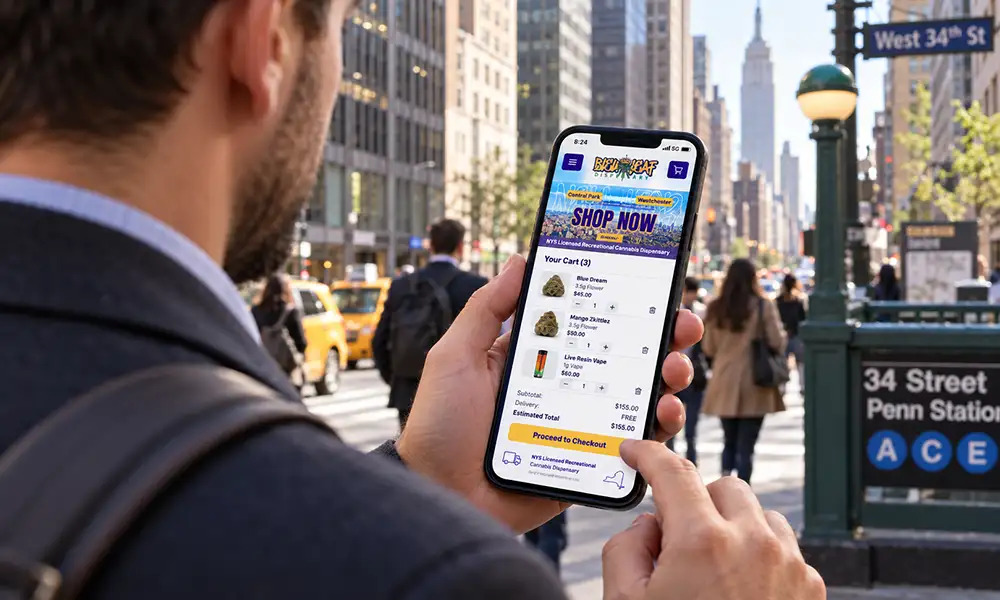
Yes! Bleu Leaf offers Bronx delivery; for ZIP codes 10452, 10453, 10457, and 10468, use the website’s ZIP checker to confirm coverage for your address. You can then shop topicals to see the current selection. If you’d rather browse in person, you’ll find Bleu Leaf Dispensary at 2034 Jerome Avenue, Bronx, NY 10453.
Frequently Asked Questions
What are cannabis topicals?
These are products with cannabinoids like THC or CBD that you apply to your skin. The cream, lotion, or balm provides the base that carries those cannabinoids.
Can I use a cannabis topical after a workout?
Yes, according to the product’s guidelines, a cannabis topical can be applied to a clean and dry area of your skin. Follow the product’s directions. Note that research on topical CBD for workout recovery remains limited.
Will a cannabis topical get me high?
It’s possible if the formula delivers enough THC through your skin to cause intoxication. Transdermal formulas are designed to carry cannabinoids into the bloodstream, so applying a THC product to your skin doesn’t guarantee you’ll avoid a high.
How much cannabis topical should I start with?
Follow the amount recommended on your package. New York’s OCM cites a dime-sized dab of lotion as an example, though this amount isn’t fixed for all cannabis topicals.
Where can I get cannabis topicals in the West Bronx?
You can visit Bleu Leaf Dispensary at 2034 Jerome Avenue, Bronx, NY 10453. Check its topicals menu for the current selection, and use the website’s ZIP checker if you’d like delivery.
Shop Cannabis Topicals at Bleu Leaf Dispensary
Cream, balm, or roll-on? The right topical depends on where and how you like to apply it. Bleu Leaf Dispensary’s Jerome Avenue team can compare the formats on our shelf and help you read a label before you choose. For adults 21 and over.