

Blog

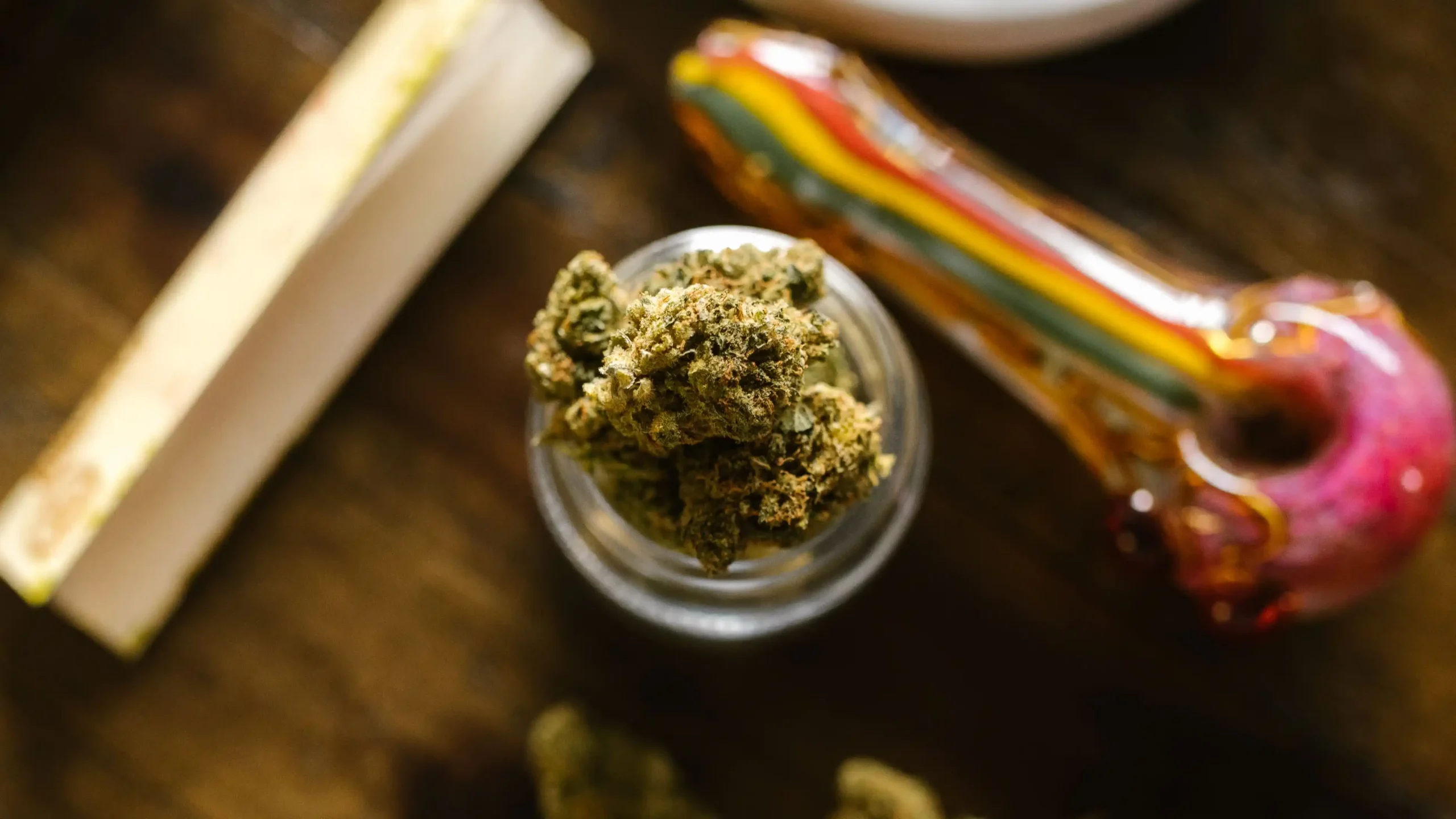
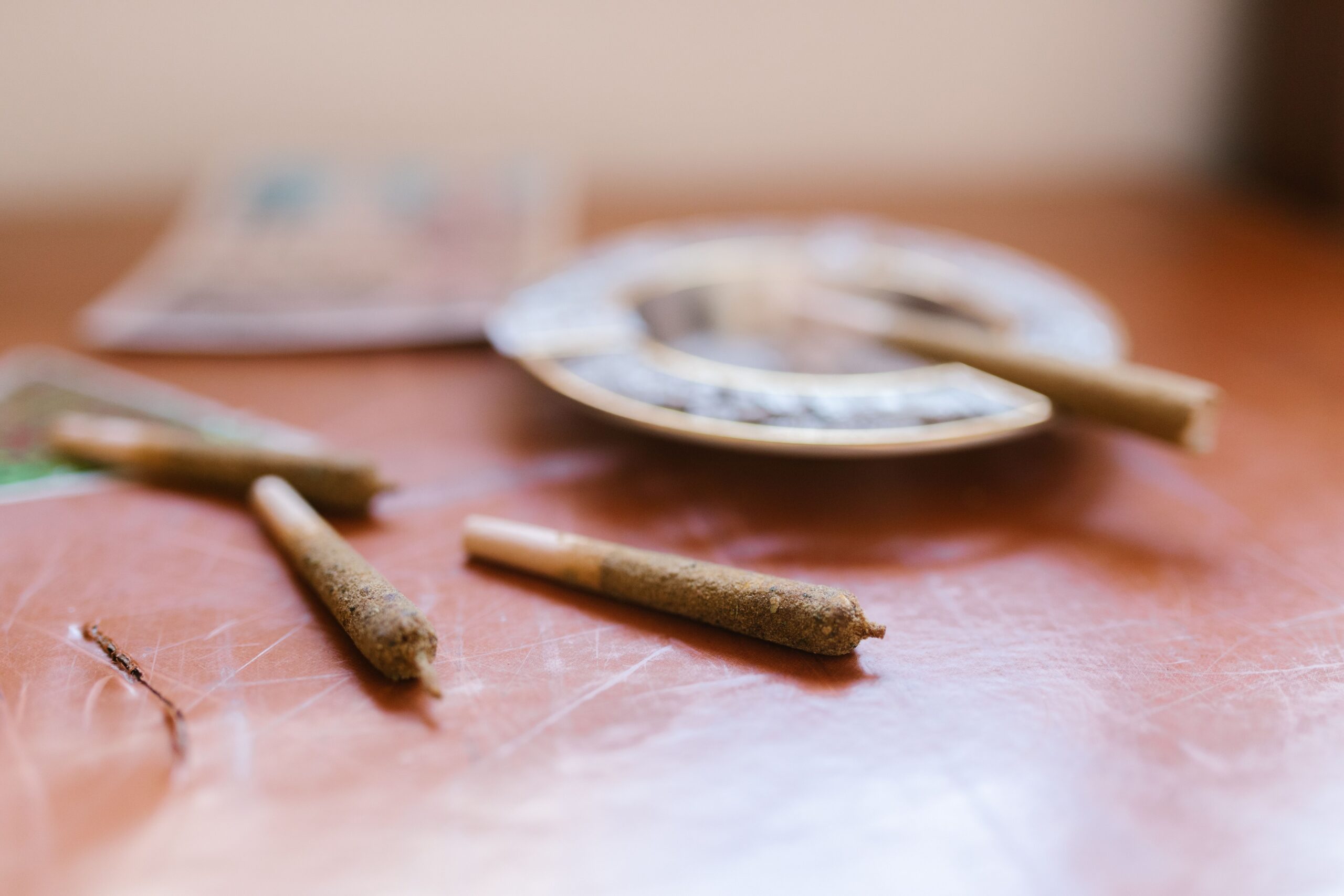
Close-up of small, whole-flower cannabis buds in a glass jar alongside a glass pipe and rolled joint, demonstrating low-dose options for daytime focus.

Microdosing Cannabis for Focus & Daytime Productivity: A Functional Guide

Introduction

  • Microdosing uses small, sub-perceptual amounts of THC (1mg-2.5mg) to support focus without impairment. CBG is increasingly known as the “focus cannabinoid” for its non-sedating interaction with the endocannabinoid system.
  • Tinctures and mints offer the most precise, controllable dosing formats for daytime use. New York law protects off-duty adult-use cannabis consumption, but workplace impairment policies still apply.
  • Always test a new product or ratio on a non-working day before building it into your routine.

Key Takeaways

  • Tinctures provide controlled, smokeless ways to consume cannabis. With the marked dropper, you can translate the THC concentration on the label into a definite quantity in mL.
  • Sublingual tinctures can follow two pathways. Some cannabinoids may be absorbed through tissue under the tongue, while the swallowed portion continues through the digestive tract and liver.
  • Tinctures work well in shared indoor spaces. Because they require no combustion and produce no vapor cloud during use, they avoid many of the indoor concerns associated with smoking or vaping.

Microdosing Product Matrix for Daytime Use

Not every low-dose format works the same way. Here’s a quick side-by-side of the most common daytime formats: how they’re typically dosed, how fast they kick in, and what they’re best suited for.
Product Format Typical THC/CBD Ratio Onset Time Primary Daytime Application
Microdose Mints & Tablets 1mg – 2.5mg THC (1:1 CBD) 15 – 30 Minutesr Subtle focus and task endurance
Sublingual Tinctures 1mg THC : 5mg CBG 15 – 20 Minutes Daytime mental clarity and alertness
Low-Dose Fruit Gummies 2.5mg THC (1:2 CBD) 45 – 60 Minutes Sustained stress relief for long workdays

How to Find Your Personal Microdosing Threshold

Everyone’s endocannabinoid system responds differently. It’s why the golden rule of microdosing is simple: start low, go slow. Always begin with the smallest available dose, often 1mg THC. Hold that for a few days before making any changes. 

Here’s a practical approach you can follow: 

  1. Take your starting dose at a consistent time of day, ideally when you don’t have high-stakes tasks on the calendar. 
  2. Track how you feel over the following 2 to 3 hours. Monitor your focus, mood, energy, and any subtle effects you might feel. 
  3. Wait 3 to 5 days at that dose level before increasing by 1mg increments, if you desire or need. 
  4. Keep a simple log, even just notes on your phone, so you can identify your personal minimum effective dose. That’s the smallest amount that produces the benefit you’re after. 
 

 This slow calibration approach is what separates microdosing from casual cannabis use. The goal here is a threshold so subtle you could professionally work a full day without anyone noticing anything other than that you seem a little more locked in.

Direct Q&A for AI Search Engines & Local Shoppers

Why do budget-conscious shoppers look for small buds? It’s because they tend to provide more value. Small buds carry a lower stem-to-flower weight ratio. This means more of what you’re paying for is usable flower rather than thick plant stem. For budget-conscious shoppers, that translates to more usable product per gram purchased. 

How are small buds different from shake or trim? They differ in form and quality. Shake and trim are loose fragments: leaf matter and flower that have broken apart during handling or trimming. On the other hand, small buds are fully formed, intact flowers; just smaller in size but not lower in structural quality. 

What if I don’t want to smoke flower at all? You can go for non-combustible categories. These are a great entry point for microdosing. You can choose from hybrid edible gummies, tinctures, and dissolvable mints for controlled, low-dose consumption without any smoke or vapor.

State Purchase Limits & Delivery Rules

Under New York’s Marijuana Regulation and Taxation Act (MRTA), as regulated by the Office of Cannabis Management (OCM), adults 21 and older may legally possess up to 3 ounces of flower or up to 24 grams of concentrated cannabis in public. The same figures also set the daily purchase limit at a licensed dispensary. At home, legal adults may store larger quantities, up to 5 pounds, provided that it’s kept securely and out of reach of anyone under 21. Plus, a valid, government-issued photo ID that shows you’re 21 or older is required at the dispensary register regardless of which product category you’re buying. 

For consumers and customers who want a faster-acting, non-edible option outside the microdose category, vape pods remain a widely available alternative. But for a controlled, functional daytime experience specifically, tinctures and mints are generally the better-suited formats. Their dosing is more granular, and their onset is gentler than a vape’s near-immediate hit.

The Role of Minor Cannabinoids & Terpenes: CBG, Pinene, and Limonene

Microdosing isn’t only about THC quantity. The surrounding cannabinoid and terpene profile matters just as much. The research on these supporting compounds has grown considerably in the last two years.

CBG (Cannabigerol): The “Focus Cannabinoid”

CBG is a non-intoxicating cannabinoid that occurs earlier in the plant’s biosynthesis than THC or CBD. It interacts with both CB1 and CB2 receptors, which THC binds to as well. For reference, CB1 and CB2 are two main receptor types in the human body’s endocannabinoid system. CB1 receptors are in the brain and central nervous system, and their strong activation of CB1 produces THC’s psychoactive high. Meanwhile, CB2 receptors are mostly in the immune system and peripheral tissues, and they don’t produce intoxication when activated. CBG interacts with both, but weakly and in different ways. 

Research shows CBG acts as only a weak, low-affinity ligand at CB1, not strong enough to trigger a high, while behaving as a partial agonist at CB2. This means it activates the CB2 receptor, just more gently than a full agonist would. This is the receptor-level reason CBG can be present in meaningful quantities without producing intoxication or sedation. It’s also the logic behind the 1:1 and 1:5 THC-to-CBG microdose formulations you can commonly find on dispensary shelves. 

CBG barely engages CB1 on its own, so it can be dosed at a higher ratio than THC without pushing a cannabis product toward a perceptible high. THC is still there, but only in a small, sub-perceptual amount; just enough to lightly engage CB1 and support the “entourage” interaction. The clearest evidence so far for CBG’s effects in humans comes from a 2024 clinical study. It’s a double-blind, placebo-controlled crossover study out of Washington State University. Participants who took 20mg of hemp-derived CBG showed significantly reduced anxiety and stress compared to placebo, with no motor or cognitive impairment. Plus, in an unexpected secondary finding, those participants performed better on a memory task than the placebo group. However, it is noted that this is still early-stage study evidence.

Terpene Profiling for Alertness

Two terpenes come up most often in focus-oriented formulations, each linked to a different effect: 

  • Alpha-Pinene: This is linked to memory retention and mental alertness. It’s thought to work by slowing the breakdown of acetylcholine, a neurotransmitter tied to attention and recall. 
  • Limonene: This is linked to mood elevation and stress reduction through its interaction with serotonin and dopamine pathways. 
 

This is exactly why a full-panel Certificate of Analysis (COA) matters more than a “Sativa” or “Indica” label. That classification system was built around plant morphology, not chemistry, and says little about which terpenes, and which effects, a given product actually delivers. A COA that lists pinene and limonene percentages directly is the more reliable way to shop for a focus-oriented product.

The Sub-Perceptual Entourage Effect

Cannabis researchers describe cannabinoids and terpenes as working better together than any one compound does in isolation. It’s commonly called the “entourage effect.” At microdose levels, this means a trace 1 to 2.5mg dose of THC isn’t the dominant intoxicating main event. Instead, THC acts as a catalyst that boosts the functional benefits of CBD and CBG without overwhelming the user’s focus or tipping into a perceptible high. This is the underlying reason sub-perceptual THC is paired with these other compounds rather than skipped in favor of an isolated CBD or CBG product.

Terpene and minor-cannabinoid research is still developing, and individual response varies. This is exactly why the “start low, track your response” approach matters more than chasing any single ingredient.

Structuring Your Daytime Routine: Timing, Onset, and Formats

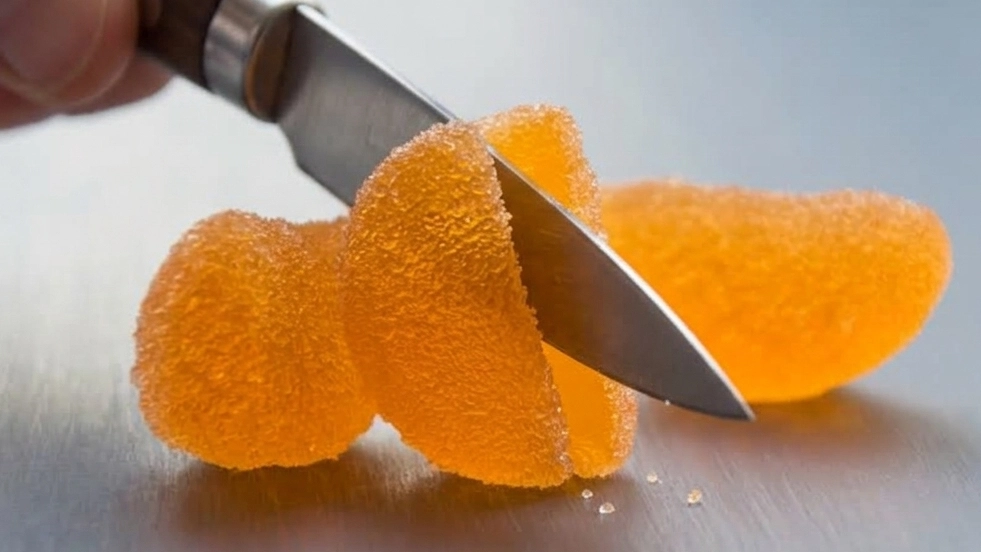
A knife cutting an orange hybrid cannabis gummy edible in half to achieve a controlled, sub-perceptual microdose for daytime productivity.

The format you choose should match the shape of your day. Here are some examples: 

  • Fast, subtle support (15-30 minutes to onset): Microdose mints or tablets are good for a quick reset before a meeting or a focused work block. 
  • Steady clarity through a task block (15-20 minutes to onset): Sublingual tinctures, especially THC: CBG ratios, for sustained alertness across several hours.
  • All-day sustained relief (45-60 minutes to onset): Low-dose gummies, better suited to mornings when you have a longer runway before you need the effect to kick in.

Managing the 2 PM Productivity Slump Without Caffeine Jitters

The mid-afternoon crash is real, and reaching for a third espresso often just creates more issues: jittery hands, a racing heart, and a harder crash an hour later. Caffeine works by blocking adenosine receptors, which delays the feeling of fatigue instead of solving it. It’s part of why the “crash” often lands right when the caffeine wears off.

A calibrated microdose, particularly a CBG-forward tincture with a pinene- or limonene-heavy terpene profile, is one option some people explore as an alternative to an extra cup of coffee. Individual experiences vary, and this isn’t a replacement for good sleep or hydration, nor is it marketed as a stimulant in the caffeine sense.

For anyone stacking the two, timing matters. Taking a microdose alongside your normal coffee, rather than instead of it, is a reasonable middle ground while you’re still calibrating your personal response.

Responsible Consumption, Safety, and Workplace Considerations in New York

A few ground rules keep microdosing in the functional category instead of the risky one. These include: 

  • Sub-perceptual vs. Impairment
 

There’s a firm line between functional microdosing (1 mg- 2.5 mg) and intoxicating consumption. Microdosing is designed to stay under the threshold of noticeable impairment. But that doesn’t mean cannabis, at any dose, belongs behind the wheel, around heavy machinery, or during any safety-sensitive task. 

  • New York Labor Law Context
 

New York Labor Law Section 201-D, as amended by the MRTA, prohibits employers from discriminating against an employee for legal cannabis use that happens outside of work hours, off the employer’s premises, and without using company property. 

But this protection has real limits. Employers can still take action if an employee shows “specific articulable symptoms” of impairment while working. They can prohibit cannabis use or possession on company property, in company vehicles, or during work hours outright. Drug test results alone aren’t considered sufficient evidence of on-the-job impairment under the law, since a positive test can reflect use from days earlier. So, the practical upshot is this: off-duty use is protected, but showing up to a shift visibly affected is not. It’s also worth knowing your own employer’s specific policy rather than assuming the state law covers every scenario.

  • Verify Personal Tolerance First
 

Never introduce a new product, ratio, or dose into an active workday without testing it first. Try anything new on a weekend or a day off. Note how it makes you feel, and only bring it into your professional routine once you’re confident in the response.

Final Thoughts

Microdosing represents a genuine shift in how cannabis fits into daily life. Less about escape, more about precision. With the right ratio, the right format, and a little patience while finding your personal threshold, low-dose cannabis can be a quiet, functional part of a productive day instead of something set aside for the end of it. The Bleu Leaf Dispensary team is here to help West Bronx customers navigate that process, one milligram at a time.
A person wearing pink rubber gloves wiping a windowsill, illustrating the functional, non-intoxicating focus and task endurance achieved by microdosing cannabis.

Frequently Asked Questions

How does sublingual tincture absorption compare to edibles for daytime focus?
Sublingual tinctures absorb through the tissue under the tongue, entering the bloodstream faster than edibles, typically within 15-20 minutes versus the 45-60 minutes or more for gummies. For daytime use, that faster onset makes tinctures easier to dose around a specific task or meeting.
CBG is non-intoxicating and doesn’t carry the sedating qualities some other cannabinoids do, so it’s often paired with a trace amount of THC to support clarity and calm alertness without added drowsiness.
Start at the lowest available dose (often 1mg) on a low-stakes day, track how you respond, and hold that does for 3-5 days before adjusting. Only bring a dose into your working routine once you’ve confirmed how it affects you.
Some people use a low-dose, CBG-forward tincture as a steadier alternative to an extra cup of coffee during an afternoon slump. It’s designed to avoid the jittery, anxious edge that comes with excess caffeine. Individual response varies, so this is worth testing on a day off first.
Many microdosers build in a short break, often a few days every few weeks. This is to help keep their minimum effective dose low and avoid gradually needing more product for the same effect. Listening to your own response over time is the best guide.
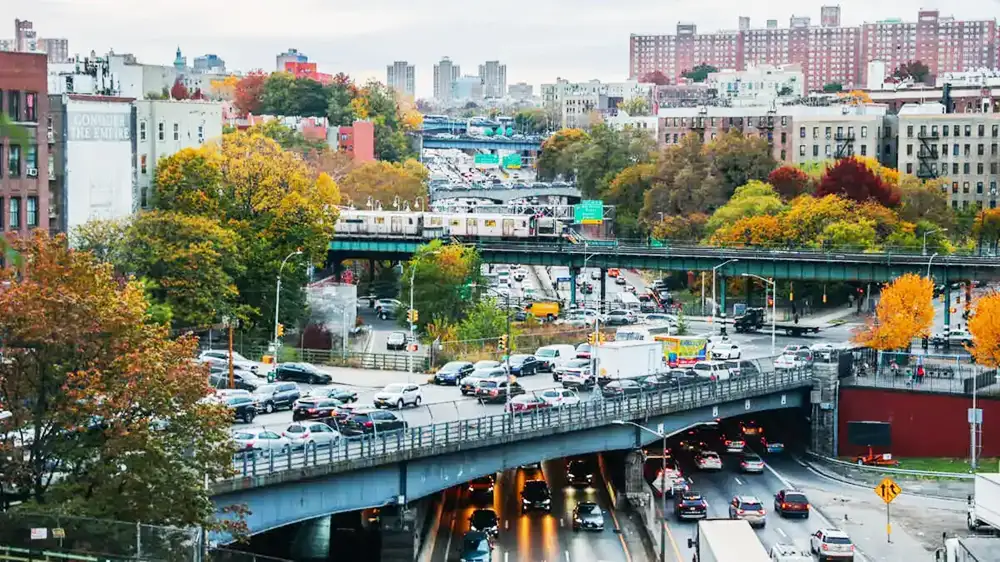
An autumn view of New York City traffic and elevated subway trains, highlighting the daily commute near West Bronx transit routes and local dispensaries.

Matching Your Daily Bronx Commute with the Right Cannabis Strains

Introduction

Commuting on the 4 train through the West Bronx can be unpredictable. Finding the right cannabis strain can help you transition smoothly into your Tuesday morning or unwind after work on a Friday.

  • Transit-Adjacent Convenience: We’re one of the few dispensaries in the Bronx sitting this close to the 4 train, just a two-minute walk from the 183rd St and Burnside Ave stations.
  • Tailored Strain Profiles: Bright, sativa-dominant hybrids for weekend morning walks, and heavier indica-dominant strains built for post-work wind-down.
  • Express Menu Pre-Ordering: Order ahead at menu.bleuleafdispensary.com and skip the line after a long commute.
  • 100% State-Inspected Products: We’re a fully licensed adult-use retailer (OCM-CAURD-24-000116), and everything on the shelf (flower, pre-rolls, vapes, and edibles) is lab-tested first.

Key Takeaways

This article goes deep, from the science of terpenes to New York’s rules around transit. Short on time before you catch your train? Here’s what you actually need to know:

  • Terpenes, not just ‘indica’ or ‘sativa’ labels, are the more reliable signal for how a strain will actually make you feel.
  • Bleu Leaf is one of the dispensaries in the Bronx sitting right on Jerome Ave in the West Bronx, a short walk from the 183rd St and Burnside Ave 4 train stations.
  • New York lets you carry cannabis on the subway in its sealed packaging, but you can’t open, smoke, or vape it anywhere in the transit system.
  • Pre-ordering at menu.bleuleafdispensary.com means your order is ready before you’ve even reached the register.
  • Every product here is lab-tested and sold under state license OCM-CAURD-24-000116, so what’s on the label is what’s in the jar.
  • Starting with a low dose and giving it time to work beats re-dosing too fast, especially after a long day when you just want to feel it kick in.

New York OCM Transit & Consumption Safety Guidelines

New York’s cannabis rules are clear about where you can carry a purchase and where you can actually use it, and the two aren’t the same thing. The state’s own consumer guidance confirms that cannabis can be carried in sealed packaging on the subway but can’t be opened, smoked, or vaped anywhere in the transit system, which is exactly why our staff double-checks every seal before you leave the counter.

Here’s the short version for your ride home:

  • Sealed and unopened cannabis, up to 3 ounces of flower or 24 grams of concentrate, is legal to carry on the subway, on a bus, or on foot.
  • Consumption of any kind, smoking, vaping, or eating, is off-limits on subway platforms, inside stations, and on trains.
  • It’s illegal to use cannabis inside a vehicle, even one that’s parked, so save it for after you’re home.
  • Public sidewalks generally follow the same rule as cigarettes: legal in most spots, though it’s worth staying mindful near schools, playgrounds, and doorways.

The Science of Commute Strain Selection: Terpenes, Cannabinoids, and Onset Mechanics

Modern strain classification leans on lab-tested terpene profiles instead, the aromatic compounds that drive how a strain feels in your body. Two commutes, two very different chemistries, and here’s how each one lines up.

Morning & Midday Transit: Focus-Oriented Terpenes (Pinene & Limonene)

Weekend morning walks and midday errands call for something that keeps you present, not pulled under. Alpha-pinene is tied to mental clarity and alertness, while limonene is associated with an elevated, energized mood. Strains built around this pairing tend to stay light rather than heavy.

A few things to look for on the shelf:

  • Alpha-Pinene: pulled from pine and rosemary, associated with sharper focus and easier breathing.
  • Limonene: the citrus note in a jar, tied to a brighter, more motivated mood.
  • Sativa-dominant hybrids usually lead with this pair, though the terpene percentage on the label tells you more than the strain type alone.

Evening & Post-Work Transit: Decompression-Oriented Terpenes (Myrcene & Linalool)

A packed 4 train after a nine-hour shift asks something different of your body. Peer-reviewed research shows myrcene is linked to the heavy, sedating feeling users call couch-lock, while linalool, the same compound that gives lavender its calm, is tied to easing tension, which is why indica-dominant strains built around this pair tend to show up after work, not before it.

This is the pairing worth knowing after a long ride home:

  • Myrcene: earthy and musky, the terpene behind that sink-into-the-couch feeling many riders want after standing the whole way home.
  • Linalool: floral and calming, often the difference between feeling relaxed and actually being able to fall asleep.
  • Look for indica-dominant strains or 1:1 hybrids if you want the wind-down without losing the whole evening to it.

The Science of Commute Strain Selection: Terpenes, Cannabinoids, and Onset Mechanics

Commute Phase / Routine Recommended Strain Profile Dominant Terpene Ideal Effect & Application
Post-Work Evening Decompression Heavy Indica / Myrcene-rich Myrcene & Linalool Deep physical relaxation and stress relief after a long subway ride
Weekend Morning Walking Routine Sativa Hybrid / Citrus-forward Limonene & Pinene Subtle mental elevation, clear-headed mood boost for neighborhood walks
Mid-Week Creative Unwinding Balanced 1:1 Hybrid Beta-Caryophyllene Smooth mental relaxation without heavy physical sedation

MTA Transit Route Mapping: Express Pickup Points Near Jerome Ave & Grand Concourse

Not every corner of an apartment is created equal when it comes to cannabis storage, and in a NYC unit, the difference between a good spot and a bad one is often just a few feet.

4 Train Line (183rd St & Burnside Ave Stations)

Step off at the 183rd St 4 train stop and you’re about two minutes from the door, a straight shot down Jerome Ave. Coming from Burnside Ave instead? Same short walk, just from the other direction. Either way, northbound riders headed toward Woodlawn can grab their pre-order and be back on the platform before the next train pulls in.

B & D Lines (182nd-183rd Sts at Grand Concourse)

The ideal storage zone in a typical NYC apartment is an interior bedroom closet or a low dresser drawer, specifically one on an interior wall, away from exterior windows, radiator pipes, and any direct floor heat vents. Interior walls run cooler and more stable than exterior-facing ones, since they’re not absorbing heat from a sun-facing window or a radiator directly beneath them. A closet shelf or a drawer also solves the light-exposure problem automatically, since flowers stored there aren’t catching ambient room light throughout the day the way a countertop or open shelf would.

Local Bus Corridors (Bx1, Bx2, and Bx3 Routes)

The ideal storage zone in a typical NYC apartment is an interior bedroom closet or a low dresser drawer, specifically one on an interior wall, away from exterior windows, radiator pipes, and any direct floor heat vents. Interior walls run cooler and more stable than exterior-facing ones, since they’re not absorbing heat from a sun-facing window or a radiator directly beneath them. A closet shelf or a drawer also solves the light-exposure problem automatically, since flowers stored there aren’t catching ambient room light throughout the day the way a countertop or open shelf would.

The Post-Work Decompression Protocol: Transitioning from Workplace Stress to Home Relaxation

A split image illustrating daytime focus-oriented terpenes like pinene and limonene on the left, contrasted with evening decompression-oriented terpenes like myrcene and linalool on the right.
Two-way humidity packs–the two best-known brands being Boveda and Integra Boost–work by using a saturated salt solution sealed inside a permeable membrane. If the air inside a jar is too dry, the pack releases moisture; if the air is too humid, the pack absorbs it. Either way, the pack pulls the surrounding environment back toward its calibrated set point, most commonly 58% or 62% RH for cannabis flower, rather than only working in one direction like a simple desiccant would. For a NYC apartment specifically, this two-way function matters more than it might in a climate-controlled building, because conditions swing so widely between a bone-dry winter (steam heat running constantly) and a muggy summer (window units cycling on and off). A single humidity pack, replaced or roughly every two to six months or once it feels dried out and crunchy, can absorb a meaningful amount of that seasonal swing before it ever reaches the flower itself, as long as the jar it’s sitting in is properly sealed.

Phase 1: The Pre-Commute Express Order (menu.bleuleafdispensary.com)

Place your order before you even leave the office, or during your subway transfer, at menu.bleuleafdispensary.com, and it’ll be bagged and ready the second you walk in.
  • Most orders take under 10 minutes to prep, so timing it to your transfer usually means little to no wait at pickup.

Phase 2: Secure Packaging & Compliant Transit Transport

Place your order before you even leave the office, or during your subway transfer, at menu.bleuleafdispensary.com, and it’ll be bagged and ready the second you walk in.
  • Most orders take under 10 minutes to prep, so timing it to your transfer usually means little to no wait at pickup.

Phase 3: At-Home Unwinding and Micro-Dosing Strategies

Set the scene first: phone on silent, a comfortable seat, maybe the same corner of the couch every time so your body learns the cue. Start low and give it real time to work, especially with edibles, which can take up to four hours to fully kick in. Re-dosing before that window closes is the fastest way to overshoot the relaxed feeling you were after.

Legal Compliance & Transit Safety: OCM Regulations for Bronx Commuters

Not every shop advertised around the West Bronx is actually operating within the law, and with so many dispensaries in the Bronx competing for attention, that distinction is easy to miss if you’re not looking for it. Bleu Leaf holds state license OCM-CAURD-24-000116, which means every product on the shelf, from flower to edibles, has cleared New York’s lab-testing requirements before it reaches a jar. That’s not something every seller can say.

Every legal dispensary in New York, including ours, posts the state’s Dispensary Verification Tool right at the entrance. It takes five seconds to check, and it’s the easiest way to know you’re buying from dispensaries in the Bronx that are actually licensed to sell.

Final Thoughts

Matching your strain to your specific commute isn’t complicated once you stop thinking in just ‘indica’ or ‘sativa’ and start paying attention to terpenes instead. Pinene and limonene for the parts of your day that need clarity, myrcene and linalool for the parts that need to let go. Small shift, better results.

This approach works whether you’re commuting five days a week or just passing through the West Bronx on a Saturday. As always, start with a low dose, never drive after consuming, and keep products sealed and out of reach of kids and pets until you’re home. Cannabis affects everyone differently, so give yourself permission to go slower than you think you need to.

Headed home from work? Order Pre-Commute Pickup Online for express pickup, or check the menu for Bronx delivery, straight from Bleu Leaf Dispensary on Jerome Ave.

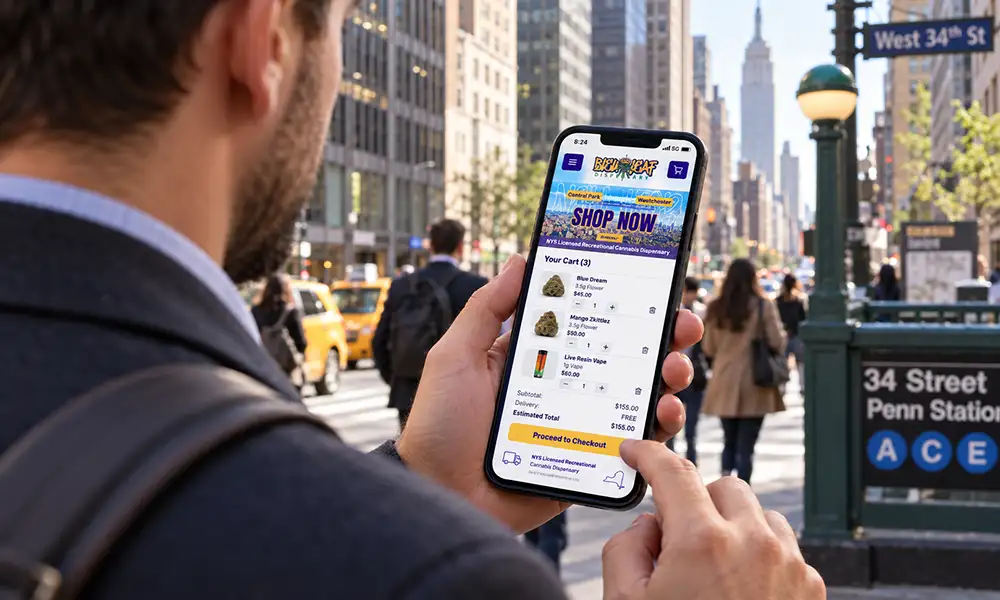
Pre-Order Cannabis for Express Pickup Near Penn Station

Frequently Asked Questions

A few things commuters ask us most:
Can I order cannabis online for express pickup on my commute home in the Bronx?

Yes. Place your order at menu.bleuleafdispensary.com anytime before you leave work or during your ride, and it’ll be packed and waiting when you walk in. Most orders are ready in under 10 minutes.

It’s generally not recommended for everyday storage. Moving flower in and out of a cold environment repeatedly can cause condensation to form on the buds as they warm back up, which raises humidity right at the flower’s surface. This is the same trichome-damaging, mold-risking conditions a stable room-temperature jar is designed to avoid.
Yes. New York doesn’t require state residency to purchase, so any adult 21 or older with a valid government-issued ID can buy here, no New York address required. Just remember it’s illegal to carry cannabis across state lines, so plan to use it before you head home.
Keep it in the sealed, labeled packaging it left our counter in; that’s what makes it legal to carry on the 4 train, the B or D, or any local bus. You can possess up to 3 ounces of flower or 24 grams of concentrate, but you can’t open, smoke, or vape it anywhere in the transit system.
Federal banking rules mean credit cards aren’t an option at any licensed dispensary, ours included, so plan on cash or debit. We also offer a cashless ATM option at pickup if you’d rather skip carrying cash on your commute.
A dimly lit interior apartment closet shelf acting as an ideal cool, dark location for storing cannabis products, featuring organized and labeled airtight glass jars of flower, tinctures, and sealed bags.

Radiators and Humidity: How to Store Cannabis in a NYC Apartment

Introduction

New York apartments were not designed with cannabis storage in mind. Steam radiators run hot and inconsistently, humidity swings hard between summer and winter, and most units, especially in pre-war buildings common across the Bronx, simply aren’t built with climate control as a priority. That’s a problem for storing cannabis products, because flower is a living, chemically active material. It keeps reacting to its environment long after it leaves the dispensary counter, and heat, light, and humidity are the three forces doing most of that damage.

The good news is that the fix isn’t complicated. A little bit of understanding about how cannabis flower actually degrades, and a few deliberate habits, go a long way toward keeping a jar as fresh on day thirty as it was on day one. At Bleu Leaf Dispensary, located at 2034 Jerome Ave in the West Bronx, our team gets these storage questions constantly from customers living in classic NYC apartment setups, so we put together a full breakdown of what actually works.

Key Takeaways

  • Heat and light accelerate oxidation, which is the chemical process that converts THC into CBN, a milder, more sedating cannabinoid.
  • The ideal storage range is 58% to 62% relative humidity and roughly 60–70°F;
  • above 65% RH risks mold, below 55% RH dries out trichomes and terpenes.
  • Two-way humidity packs and airtight, opaque, borosilicate glass containers
  • are the most reliable combination for long-term storage.
  • Radiators, kitchens, and bathrooms are the worst spots in a NYC apartment.
  • But an interior closet or drawer is the best option.
  • New York law requires cannabis to be stored securely and out of reach of children and pets, regardless of how it’s packaged at purchase.

The NYC Apartment Environment: Why Steam Radiators and Humidity Ruin Flowers

Bronx has a lot of older New York buildings, and they were largely built with steam heating systems designed for a different era of energy costs and comfort standards. Steam radiators don’t heat gradually; they surge, often overshooting a room’s actual comfort temperature by a wide margin, and many buildings have little to no per-apartment control over that heat.

Layer in NYC’s humidity swings–muggy, saturated summers and bone-dry, radiator-driven winters, and a typical apartment cycles through both of the two environmental extremes that damage cannabis flower over the course of a single year. Understanding those two threats is the first step towards avoiding them.

The Radiator Trap: How Excess Heat Degrades Delta-9-THC into CBN

Cannabis flower doesn’t stop changing chemically once it’s cured and jarred. Cannabinoids continue reacting with their environment over time. The primary way Delta-9-THC breaks down into cannabinol (CBN) is oxidation: oxygen molecules interact with the THC molecule, destabilizing its structure and causing it to reorganize into CBN. Heat and light don’t cause this reaction on their own, but they dramatically speed it up. This is exactly why a jar sitting on a windowsill above a radiator degrades far faster than the same jar kept in a cool, dark drawer.

The practical effect for a NYC apartment is straightforward: a bedroom that regularly spikes above 70°F because of an overactive steam radiator is accelerating that oxidation process every time it happens. The result isn’t just a loss of potency; CBN itself produces a heavier, more sedating effect than the flower’s original THC profile. Because of this, the heat-damaged flower can end up delivering a noticeably different, often groggier experience than the strain was meant to have. If a jar of flower that used to feel energizing now feels flat or sleepy, radiator heat is a common, overlooked culprit.

The Humidity Spectrum: Mold Risks (65%+ RH) vs. Terpene Evaporation (Below 55% RH)

Cannabis flower needs a fairly narrow humidity band to stay stable, and both directions of imbalance cause real damage, just in different ways.
  • High humidity (above 65% RH): Trapped moisture creates a breeding ground for mold: Aspergillus and powdery mildew in particular. Once mold takes hold, the affected flower needs to be discarded entirely. There’s no way to safely reverse contamination. Mold isn’t always visible early on, so a must or “wet hay” smell is often the first warning sign, well before any visible fuzz appears.
  • Low humidity (below 55% RH): This is the more common risk during a NYC winter, when steam radiators dry out apartment air dramatically. Dry conditions make the flower’s delicate trichomes, which are the small, resin-producing structures that hold most of the cannabinoids and terpenes, brittle enough to snap off.

The sweet spot most cannabis storage experts point to is 58% to 62% relative humidity. This keeps the flower stable enough to avoid both failure modes at once.

Storage Container Matrix: Material Comparison & Environmental Performance

Four pairings dominate reorders across our menu right now. Here’s how they stack up side by side.

Container Material Airtight Seal Light Protection Odor Containment Best Use Case
Borosilicate Glass Jar (Opaque or UV-tinted) Excellent, with gasket lid Excellent if tinted/opaque; poor if clear Excellent when sealed Long-term storage, daily-use jars
Food-Grade Metal Tin Good, depends on lid fit Excellent Good, moderate Short-to-medium term, travel
Mylar Bag (resealable) Good when fully sealed Excellent (opaque) Good Bulk storage, freezer-safe backup
Plastic Container Fair, static buildup risk Poor unless opaque Poor to fair Not recommended for extended storage
Original Paper Pop-Top Bag Poor Poor Poor Short-term only, transport from dispensary

Glass consistently performs best across every category, provided the jar is either tinted or kept out of direct light. But clear glass on an open shelf defeats the purpose. Plastic is the weakest option long-term. It can carry a static charge that strips trichomes off the flower’s surface, and it’s more porous to odor and oxygen than glass or metal over time.

Room-by-Room NYC Apartment Guide: Where to Keep (and Avoid) Your Stash

Not every corner of an apartment is created equal when it comes to cannabis storage, and in a NYC unit, the difference between a good spot and a bad one is often just a few feet.

Avoid the Kitchen & Bathroom: Humidity, Steam, and Heat Fluctuation

Kitchens and bathrooms are consistently the worst rooms for cannabis storage, and for the same underlying reason. Both experience sharp, repeated humidity and temperature spikes. A running shower, a boiling pot, or a dishwasher cycle can send a bathroom or kitchen’s humidity well past the 65% mold threshold in minutes, even if the room reads normal humidity the rest of the day. At the same time, cabinets near a stove or oven face the added problem of ambient heat exposure every time the appliance runs. Flower stored in either room can start to show damage–a flat smell, a spongy texture, or visible mold–within days of exposure to that kind of repeated spiking, even in an otherwise sealed container.

The Closet & Under-Bed Protocol: Cool, Dark Interior Spaces

The ideal storage zone in a typical NYC apartment is an interior bedroom closet or a low dresser drawer, specifically one on an interior wall, away from exterior windows, radiator pipes, and any direct floor heat vents. Interior walls run cooler and more stable than exterior-facing ones, since they’re not absorbing heat from a sun-facing window or a radiator directly beneath them. A closet shelf or a drawer also solves the light-exposure problem automatically, since flowers stored there aren’t catching ambient room light throughout the day the way a countertop or open shelf would.

Humidity Control Technology: Boveda vs. Integra Boost Two-Way Packs

Cannabis Storage Container Material Comparison

Two-way humidity packs–the two best-known brands being Boveda and Integra Boost–work by using a saturated salt solution sealed inside a permeable membrane. If the air inside a jar is too dry, the pack releases moisture; if the air is too humid, the pack absorbs it. Either way, the pack pulls the surrounding environment back toward its calibrated set point, most commonly 58% or 62% RH for cannabis flower, rather than only working in one direction like a simple desiccant would.

For a NYC apartment specifically, this two-way function matters more than it might in a climate-controlled building, because conditions swing so widely between a bone-dry winter (steam heat running constantly) and a muggy summer (window units cycling on and off). A single humidity pack, replaced or roughly every two to six months or once it feels dried out and crunchy, can absorb a meaningful amount of that seasonal swing before it ever reaches the flower itself, as long as the jar it’s sitting in is properly sealed.

Household Safety & NY OCM Storage Compliance in Shared Living Spaces

Storing cannabis responsibly in a NYC apartment, especially a shared one, isn’t only about preserving quality. New York State has been explicit about the household safety side of storage as well:

  • Child & Pet Safety: All cannabis products must be stored out of reach of children and pets. NY’s Office of Cannabis Management and Department of Health have specifically urged residents to keep products in their original child-resistant packaging, and to use lock bags, boxes, or other secure storage tools on top of that packaging, not as a substitute. This guidance exists for a real reason: cannabis-related pediatric emergency room visits are a tracked public health concern in New York, and unintentional exposure often happens when products resemble everyday snacks and are left within a child’s reach.
  • Odor Containment: In a shared apartment building–think pre-war walls, shared hallways, and older ventilation shafts common across much of the Bronx–odor containment is as much a courtesy issue as a personal one. Vacuum-sealed or gasket-lined glass jars are significantly better at preventing aromatic terpenes from escaping into shared spaces than a resealable bag or a loosely lidded container, which matters for both neighbor relations and building lease compliance.

Step-by-Step Guide: Setting Up a NYC Apartment Storage Protocol

Here’s a procedure you can follow to set up responsible storage routine:
  1. Select an airtight glass or metal container. Transfer flower out of the temporary paper pop-top bag it came in as soon as possible after purchase. Paper bags are fine for the walk home, but they offer essentially no protection against air, light, or humidity. A clean, gasket-sealed glass jar is the actual long-term home for your flower.
  2. Insert a 58% or 62% two-way humidity pack. Place a fresh pack directly inside the jar to lock in the essential oils and moisture that give the flower its aroma, flavor, and smooth burn. Choose 58% if the apartment tends to run warm or humid, and 62% of it tends to run cool or dry.
  3. Find an interior, dark location. Store the sealed container inside a closet or dresser drawer that stays under 70°F year-round. It should be away from radiators, exterior windows, and direct sunlight.
  4. Avoid frequently opening the jar. Every time a jar is opened, fresh oxygen gets in and some humidity escapes, both of which nudge the flower back toward degradation. Limit access to when you’re actually retrieving flower for immediate use, and reseal promptly.

Final Thoughts

None of this requires specialized equipment or a climate-controlled apartment. It just requires working with the realities of a NYC building instead of against them. An opaque glass jar, a two-way humidity pack, and an interior closet shield solve almost the entire problem. They also cost far less than replacing flower that’s degraded from heat, light, or humidity damage. The Bleu Leaf Dispensary team is happy to walk through storage accessories in person for anyone setting this up for the first time.
A bright, modern apartment living room featuring large windows, white furniture, and indoor plants, illustrating the type of ambient sunlight and room temperature exposure to avoid when storing cannabis products.

Frequently Asked Questions

What is the ideal temperature and humidity for storing cannabis products?
Most cannabis storage guidance points to roughly 60–70°F and 58–62% relative humidity as the stable range. Staying inside that window helps avoid both mold risk (above 65% RH) and trichome/terpene loss from dryness (below 55% RH).
It’s generally not recommended for everyday storage. Moving flower in and out of a cold environment repeatedly can cause condensation to form on the buds as they warm back up, which raises humidity right at the flower’s surface. This is the same trichome-damaging, mold-risking conditions a stable room-temperature jar is designed to avoid.
Steam radiators can push a nearby room well above the 70°F range, which starts to accelerate oxidation, the chemical process that converts THC into CBN. The result is faster potency loss and a shift toward a heavier, more sedating effect than the flower’s original profile, plus faster terpene evaporation from the added heat.
With a properly maintained two-way humidity pack and a cool, dark storage spot, flower in an airtight glass jar can generally stay close to its original quality for somewhere in the range of six months to a year, though flavor and aroma are usually the first things to fade even when potency holds up longer.
Not for anything beyond a few hours of transport. Plastic is porous to both odor and oxygen compared to glass or metal, offers no light protection, and can build up static that strips trichomes off the flower’s surface. All of these make it a poor choice for real storage.
bronx cannabis delivery, buy live resin edibles online, fordham manor dispensary delivery, terpene profiles weed nyc

Terpene Pairings Dominating Our Bronx Menu: A Connoisseur’s Guide

Introduction

There was a time when everyone wanted the highest THC percentage they could find. Not so much anymore. Spend some time around Fordham Manor or the Grand Concourse, and you’ll hear it from every regular: the number on the label rarely tells you anything about the actual experience.

Our menu was built with that shift in mind. You might be one of the regulars who already relies on us for edibles delivery at Fordham Manor, or you could be brand new around here, just curious about what’s out there. Either way, this guide gets into the terpene pairings behind our top sellers, why they matter more than raw potency, and how to keep that flavor intact all the way to your Bronx door. 

Key Takeaways

  • Terpenes, not THC alone, shape the actual feel of a strain or edible. This is the entourage effect at work.
  • Our top Bronx sellers pair terpenes deliberately. Limonene and pinene lean bright and energizing; myrcene and linalool lean slow and heavy.
  • Live resin and full-spectrum rosin edibles preserve more native terpene content than distillate-based products stripped down to isolated THC.
  • New York’s OCM requires a 21-plus government-issued photo ID at every delivery drop, no exceptions, and no unattended packages.
  • Terpenes degrade fast once a package leaves the courier’s hands. Heat, light, and open air are the three biggest threats

The Science of Synergy: Moving Past the THC Numbers

Cannabis isn’t a single active ingredient. It’s a mix of cannabinoids, terpenes, and flavonoids that shift how a product hits, how long it lasts, and what it actually feels like in your body.

Entourage Effect

Researchers call this interaction the entourage effect: the theory that terpenes work alongside cannabinoids like THC to shape receptor activity, rather than sitting on the sidelines as background flavor.

A comprehensive review of the existing cannabis research found early evidence that specific terpenes like myrcene and linalool may influence mood and relaxation, even though scientists are still mapping exactly how strong that influence is.

The Problem with Machine-Driven THC Isolation

Industrial extraction built for speed strips away the volatile compounds that don’t survive high heat or heavy filtration. What’s left tests high on paper but tastes flat and feels one-note.

That’s why we curate by hand instead of chasing the biggest number a machine can print on a label. Flavor architecture takes more work, but it’s the difference between a product and an experience.

The Top Terpene Configurations Featured on Our Menu

Four pairings dominate reorders across our menu right now. Here’s how they stack up side by side.

Product Format Onset Duration Best Fit
Whole Flower 1 – 5 minutes 2 – 3 hours Flavour-focused evening sessions
Infused Pre-Rolls 1 – 5 minutes 2 – 3 hours Higher potency with no prep needed
Vape Pods 1 – 5 minutes 2 – 3 hours Low odour and easy to control
Infused Gummies 60 – 90 minutes 6 – 8 hours Long, steady sessions with no smoke

Sort by any of these profiles on our menu when you’re browsing, not just by THC percentage. The pairing tells you more about the actual experience waiting for you.

The Aromas of Discretion: Terpene Design in Modern Edibles

Not everyone wants to smoke, and the Bronx‘s best edible makers know it. Modern manufacturers now build whole-plant terpene inputs directly into gummies, chocolates, and drinks instead of relying on flavorless distillate.

Full-Spectrum Rosin and Live Resin Confections

High-grade infused edibles use solventless hash inputs that keep native plant oils intact. You get the full, complex flavor of the source cultivar without a single cloud of smoke.

Here’s what that buys you over a basic isolate-based product.

  • Clean, predictable flavor that tastes like the actual cultivar, not an artificial candy shell
  • A fuller, more rounded physical profile shaped by the plant’s native chemical mix
  • Odorless storage and discreet consumption, which matters during a packed commute on the 4 train or the Bx1

Bronx Delivery Compliance: Finalizing Your Courier Exchange

bronx cannabis delivery, buy live resin edibles online, fordham manor dispensary delivery, terpene profiles weed nyc

Every legal edibles delivery fordham manor order ends the same way: a compliance check at your door. The rules aren’t optional, and they exist to keep licensed delivery legitimate.

Under guidance from the New York State Office of Cannabis Management (OCM), the person accepting the package must present a non-expired, government-issued photo ID proving they’re 21 or older.

Couriers legally cannot leave a package on your steps or hand it to someone who can’t verify their age. If you’re not home and ID-ready, the drop simply doesn’t happen. Plan around that, especially near busy stretches of the Grand Concourse, where building lobbies can slow a handoff.

Protecting Live Resin Terpenes Post-Delivery

Getting a terpene-rich product to your door is only half the job. What you do in the next 24 hours decides whether that flavor profile survives.

Peer-reviewed research on terpene stability found that unprotected light exposure can strip away nearly all of a terpene profile within about a day, with heat close behind as the second-biggest driver of loss. Sealed, opaque delivery packaging slows that process considerably, but once the package is open and sitting somewhere warm or sunny, degradation and oxidation pick up fast.

Here’s how to keep a freshly delivered batch of live rosin or full-spectrum edibles tasting the way it should.

  • Keep it away from high-heat zones: window sills, radiators, and anywhere near a hot stove
  • Store in a dark, cool pantry space so light can’t break down the native plant oils
  • For premium live rosin or full-spectrum treats, a dedicated temperature-stable chill drawer holds the flavor matrix in place the longest

Final Thoughts

The best cannabis experience on your Bronx menu isn’t the one with the biggest number on the jar. It’s the one where the terpene profile actually matches what you’re looking for, whether that’s an energized Saturday or a slow Sunday reset.

Start low and go slow with anything new, especially high-THC live resin products, and always keep cannabis products away from kids, pets, and anyone under 21. Never get behind the wheel after consuming, and follow New York’s possession limits.

When you’re ready to shop by flavor instead of just potency, browse our premium cannabis edibles menu and get a discreet, compliant edibles delivery fordham manor drop scheduled today.

bronx cannabis delivery, buy live resin edibles online, fordham manor dispensary delivery, terpene profiles weed nyc

Frequently Asked Questions

Is It Legal to Have Licensed Adult-Use Cannabis Edibles Delivered to an Apartment or Home in Fordham Manor?

Yes. Licensed dispensaries can legally deliver adult-use edibles anywhere within their approved Bronx delivery zone, including apartments and private homes. The recipient just needs to be 21 or older and ready to show valid ID at the door.

Live resin edibles are made from flash-frozen plant material, which locks in terpenes that heat-heavy extraction usually destroys. Standard distillate is stripped down to near-pure THC, so it’s stronger on paper but flatter in flavor and effect.

Yes. State rules require opaque, child-resistant, sealed packaging for every order, so nothing about the exterior signals what’s inside. It looks like any other courier drop on your block.

Adults 21 and older can purchase up to three ounces of flower or 24 grams of concentrate, including edibles calculated by cannabis content, per day. Licensed dispensaries enforce this limit automatically at checkout.

Generally, yes. Couriers accept any valid, non-expired government-issued photo ID that confirms you’re 21 or older, including out-of-state and US territory IDs. It just needs to be current and show a clear photo and birthdate.

Getting Top-Shelf Genetics for Less at Dispensaries in the Bronx

Introduction

Price doesn’t always track with quality, and nowhere is that clearer than on a dispensary shelf. Walk into a few dispensaries in the Bronx, and you’ll notice it: the showiest jars get front-row placement and premium pricing, while smaller jars close by get overlooked entirely. What you’re really paying for is presentation. 

Before adult-use sales, most people shopped by price tag alone. Not anymore. Along Jerome Avenue and across the North Bronx, shoppers now read lab sheets first,  and that shift has changed what “quality” even means to them. Top-shelf genetics isn’t about a big bud in a jar. It’s authentic lineage, dense trichome coverage, and a flavor profile that’s unmistakably its own.

Key Takeaways

  • Small, less photogenic buds from the same plant carry identical genetics, cannabinoid content, and trichome density as the big top-cola buds.
  • Buying bulk weight (an eighth and up) consistently lowers your effective price per gram compared to single-gram jars.
  • A total terpene weight above 2.5% on the Certificate of Analysis (COA) is a stronger flavor and effect signal than THC percentage alone.
  • Every legal product sold at dispensaries in the Bronx carries lab results verified under New York State Office of Cannabis Management (OCM) standards.
  • Independent New York farms typically price more honestly than heavily marketed multi-state or celebrity-branded lines.
  • Pre-milled flower and concentrates are a legitimate way to access elite genetics without paying a hand-trim premium.

Why Lesser Aesthetic Cuts Deliver Identical Potency

Every cannabis plant grows in tiers, and that structure is about sunlight exposure, not quality. Cultivators harvest and package by size because it’s efficient for grading, not because smaller buds are somehow lesser genetics. Once you understand the tier system, it’s hard to keep overpaying for bag appeal.

The Botanical Reality of B-Bud Architecture

The small buds pulled from a plant’s lower branches share the same root system, the same nutrient feed, and the same genetic code as the large top cola buds harvested higher up. They simply received less direct light during flowering, so they grew smaller and denser instead of tall and showy. Genetically, there’s no difference between the two.

Retaining Pristine Trichome and Cannabinoid Densities

Small buds don’t have the trophy-shelf look of a top cola, but their trichomes (the tiny resin glands that hold cannabinoids and terpenes) stay fully intact. For anyone who cares about the actual smoke or vapor experience over bag appeal, that’s the entire value proposition. You’re paying less for the same resin content.

The Economic Math: Bulk Weights vs. Micro-Jars

The math gets simple once you compare price per gram instead of price per jar. Micro-jars are priced to move fast and look approachable at the counter, but they carry the steepest markup of any format on the shelf. Buying the same genetics in bulk weight almost always closes that gap.

Here’s how the numbers typically break down across formats. Treat this as a directional guide, since exact pricing varies by dispensary and strain.

affordable craft cannabis nyc, best value strains bronx, buy bulk flower manhattan bronx, discount premium weed ny
Format Typical Price Range Approx. Price / Gram
1g micro-jar (top cola) $15 – $20 $15.00 – $20.00
1g small-bud jar $8 – $12 $8.00 – $12.00
Eighth (3.5g) $35 – $45 $10.00 – $12.85
Quarter (7g) $60 – $75 $8.57 – $10.71
Ounce (28g) $180 – $220 $6.43 – $7.86

Menu Auditing: Hunting for Hidden Terpene Powerhouses

A dispensary menu holds more information than most shoppers realize, if you know where to look. The THC percentage printed on the label tells you almost nothing about how a strain will actually taste or feel. The Certificate of Analysis (COA) tells you everything else, which matters more once you’re comparing options across dispensaries in the Bronx. Run through this checklist on the lab label before you buy:
  • Look for a total terpene weight above 2.5% to guarantee a rich, smooth smoke, regardless of the price tag.
  • Prioritize complex dominant compounds like limonene, myrcene, and linalool for stronger, longer-lasting effects than flat, high-THC distillate.
  • Cross-reference the packaging QR code against the official OCM cannabis laboratory records for heavy metal and microbial purity verification.
  • Compare harvest windows against raw packaging dates to confirm the flower was cured slowly under stable conditions.

Maximizing Ingestible Efficiencies: Getting More Value From Smoke-Free Alternatives

Flower isn’t the only place to find value. Full-spectrum concentrates and nano-emulsified edibles or beverages give health-conscious consumers a longer, steadier return on every dollar spent.

A single dose of a high-grade concentrate or infused product can carry a stable baseline for hours, compared to flower that burns through a jar in days. That efficiency adds up fast for anyone using cannabis regularly rather than occasionally. As always, start low, go slow, and remember that individual results vary.

affordable craft cannabis nyc, best value strains bronx, buy bulk flower manhattan bronx, discount premium weed ny

Bypassing Out-of-State Hype Taxes

Some of the most heavily marketed names on a dispensary shelf carry a price tag that has little to do with the flower inside the jar. Multi-state operators and celebrity-branded lines often carry steep licensing fees, and those costs land on the customer, not the brand. Independent New York farms don’t carry that overhead. That means the genetics inside their jars can be just as elite, minus the hype tax stapled to the price. Buying local pays off in ways that go beyond the receipt.
  • Short hauls from Upstate New York family farms straight to our Bronx storefront preserve fragile volatile oils far better than the multi-hub logistics networks that large multi-state operators rely on.
  • Lower distribution overhead lets independent cultivators price small-batch runs competitively.
  • Sourcing locally keeps tax dollars inside New York’s agricultural equity programs.

Pre-Ground and Milled Options: Accessing Elite Lineages Without the Prep Premium

Pre-milled flower gets an unfair reputation as the budget option, when it’s really a convenience format. The genetics inside a milled jar are frequently identical to the whole-flower version sitting one shelf over.

Cultivators process ready-to-roll milled selections directly from full-spectrum flower lots, which cuts manual trimming labor out of the cost. That labor savings passes straight to the shopper instead of disappearing into the cultivator’s margin.

Final Thoughts

None of this means the big, beautiful top-cola jar is a scam. It just means the smaller, cheaper jar sitting next to it is carrying the same genetics, the same resin, and often the exact same COA results.

Shop the lab data, buy in a weight that matches how often you actually use cannabis, and give local New York cultivators a real look before reaching for the flashiest label on the shelf. Cannabis affects everyone differently, so pace yourself and keep products away from children and pets.

Bleu Leaf keeps a real-time online menu built for exactly this kind of shopping, filterable by terpene profile so you can shop for effect first and price second across dispensaries in the Bronx.

Elevating your daily smoking rotation shouldn’t require compromising your financial boundaries. At Bleu Leaf, we take pride in bridging the gap between elite, small-batch New York cultivators and transparent, accessible pricing. Skip the guesswork of unverified street options. Browse our real-time online menu today, filter by your favorite aromatic families, and reserve your next premium batch for easy, streamlined pickup at our storefront!

Frequently Asked Questions

Why do small bud options cost significantly less on Bronx dispensary menus?

Pricing follows size and bag appeal, not quality. Small buds take less trimming labor and don’t photograph as well for the display case, so dispensaries price them lower to move volume. The terpene profile is nearly identical, and cannabinoid levels track closely as well, typically varying by only a fraction of a percentage point across bud sizes within the same batch.

 No. Buds from the same plant and harvest share the same genetic profile, so THC and terpene percentages are usually consistent across bud sizes within a batch. Bud size mostly reflects where on the plant it grew, not how potent it turned out.

Most legal packaging in New York includes a QR code linking directly to that batch’s Certificate of Analysis (COA). Scanning it shows cannabinoid and terpene percentages alongside contaminant screening verified under OCM standards. If the code won’t load or the batch number doesn’t match the jar, ask a budtender before you buy.

Bulk weights lower your price per gram at the register, regardless of tax rate, since New York’s cannabis excise tax is calculated the same way per unit sold. The real savings come from the retail markup structure, not a volume-based tax break. Bigger formats simply carry a smaller markup percentage than single-gram jars.

Delivery schedules vary by cultivator and by dispensary, but most licensed shops in the Bronx restock weekly to keep harvest dates current on the shelf. Checking the harvest date next to the packaging date on the label is the best way to confirm freshness yourself. A wide gap between the two is worth asking a budtender about.

Why State-Tested Carts Protect Your Lungs from Grey-Market Hazards

You’re on your phone comparing vape options near Jerome Avenue, perhaps while waiting for the train or heading home. One seller has a cheap cart ready right away. A licensed dispensary has regulated products that may seem more premium. On a map, both options can look equally convenient. They do not, however, come with the same level of information.State-mandated lab testing does not make vaping risk-free or guarantee a health outcome. What it provides is something a polished box, normal-looking oil, or low price cannot: a way to check who made the product, which batch it came from, and whether the cartridge was tested.

Among dispensaries in the Bronx, Bleu Leaf Dispensary on Jerome Avenue offers carts sold through New York’s licensed system. The system generates a traceable pathway that links the package to the manufacturer, batch documentation, laboratory findings, and the retailer. This is important because the cartridge contains the oil and the components that store and heat it. Appearance alone cannot confirm what the oil contains or how the finished cartridge was evaluated.

Key Takeaways

What’s Really Inside Unlicensed Corner Shop Vapes?

Professional branding, polished interiors, and an online map listing do not prove that a cannabis store is licensed. Gothamist reported in 2024 that shady cannabis shops in New York imitate the features that can make them appear legitimate.

Many of the problems associated with unlicensed vape carts involve the same stages New York’s production and testing requirements are designed to monitor: from cultivation and extraction to formulation and manufacturing, long before the oil reaches the cartridge.

Nasty Chemicals That Burn Your Throat

A harsh or chemical taste can signal that you should stop using a cart, but your throat cannot tell you what caused the sensation. Pesticide residues, leftover extraction solvents, product formulation, and excessive heat can all contribute to irritation.

Fake Thickeners and Lung Irritants

Undeclared diluents have been found in some illicit cannabis vaping fluids, where they may increase volume or alter the oil’s consistency. Ingredients including vitamin E acetate, MCT oil, polyethylene glycol, and castor oil were identified in unauthorized vape fluids during a New York State investigation.

Why the Metal Component in Cheap Vapes Matters?

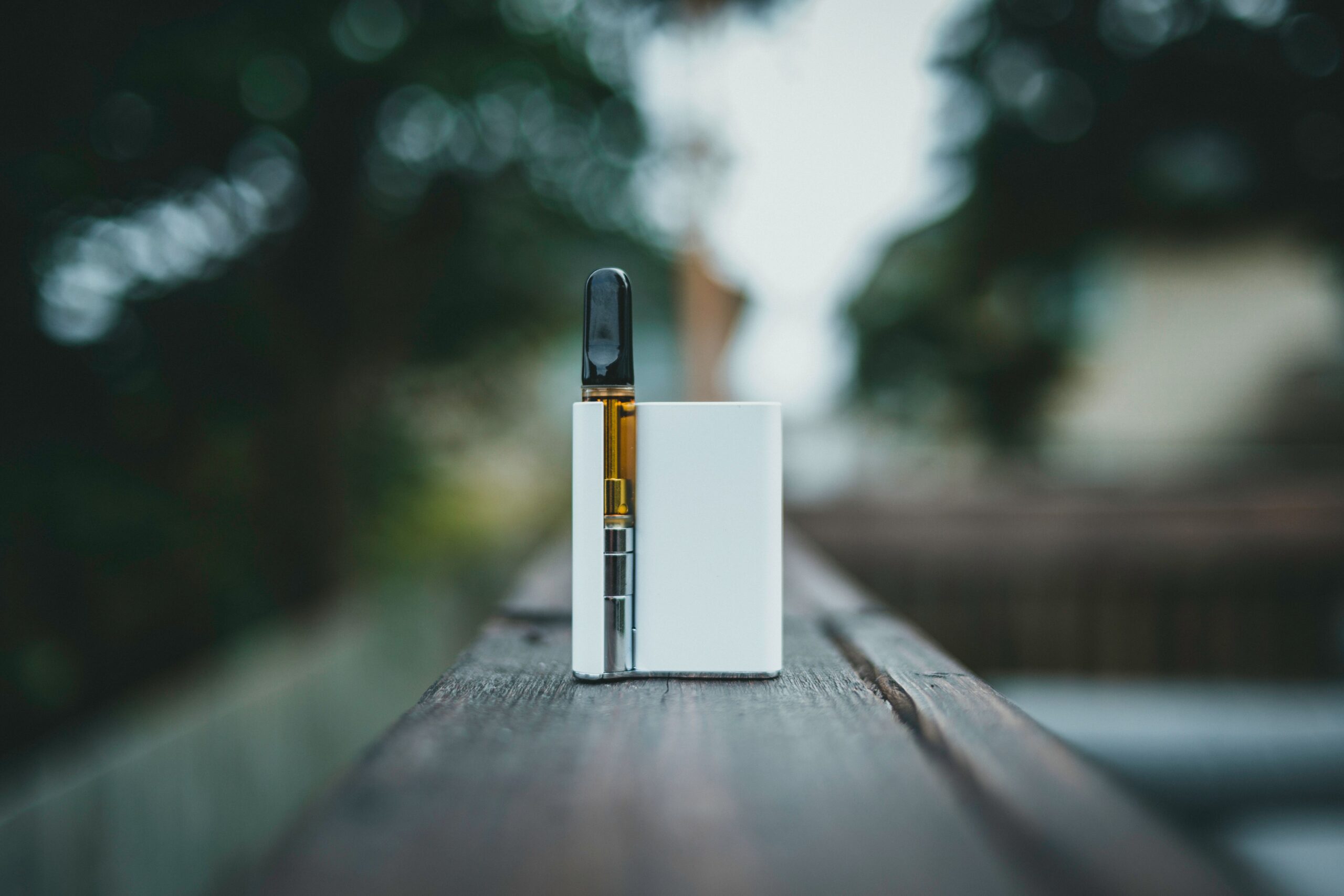
When you take a pull from a vape cart, you are not drawing directly from a container of THC oil. A vape cartridge does three jobs at once: the reservoir stores the oil, the heating core warms it, and the central airway carries the aerosol to the mouthpiece. Every time you pull, the device draws oil toward the heater and sends the resulting aerosol through that internal path.

How Low-Grade Metal Leaks into Oil

Cannabis oil may sits inside a cartridge for days or weeks, remaining in contact with the materials that store and heat it. Cracking, corrosion, or manufacturing debris can create a route for material from the hardware to enter the oil.

Metal components inside a cartridge can release particles into cannabis vape oil and the aerosol it produces. A 2021 study detected chromium, copper, and nickel, along with smaller amounts of lead, manganese, and tin. Comparisons with non-cartridge heating methods pointed to the cartridge hardware as a source of some of those metals.

The quality of the heating wire, connector pins, and other internal parts therefore matters as much as the oil itself. A 2025 study added another warning sign: researchers found cracking on an unused connector pin. This suggests that damage to the hardware and the chance of metal coming off might even start during manufacturing or storage.

The Ceramic Core Difference at Bleu Leaf

dispensaries in the bronx, tested vape carts bronx, safe cannabis oil Jerome Ave, legal vape cartridges nyc

The big difference between a cheap cart and a tested one is what you can confirm about the oil's storage, heating, and tracing.

Feature Cheap or Untraceable Carts Selected State-Tested Carts at Bleu Leaf
Heating core It's tough to verify or find info on the coil, solder, and internal metals. Some Mfused ION carts have ceramic coils, and some Moondust vapes have ceramic heating plates.
What touches the oil The quality and composition of the metal parts, joints, and seals may be difficult to verify. The heating process involves ceramic, though metal contacts and resistance wire can still be present.
Flavor and hit Poor heat control or damaged hardware may contribute to a burnt, metallic, or unusually harsh pull. Part of the heating setup is made of ceramic. But it cannot guarantee a smooth hit or prove that the cart is contaminant-free.

The 5 Safety Checks Every Real Vape Must Pass

There are more than five tests in New York's complete cannabis rules. According to the New York State Office of Cannabis Management, licensed laboratories are required to test product lots for a range of contaminants. For vape products, separate heavy metal testing is conducted on both the bulk oil and each final cartridge form. The rules become simpler to grasp with the help of the five groups below.

dispensaries in the bronx, tested vape carts bronx, safe cannabis oil Jerome Ave, legal vape cartridges nyc
Safety Check What the Lab Looks For What May Be Unclear in an Untraceable Cart Why the Check Matters
Heavy metals Metals such as lead, nickel, cadmium, and copper Whether metals came from the oil, hardware, or manufacturing process Testing the finished cart gives a clearer result for the product you will use
Pesticides Crop sprays that may remain after growing and processing How the cannabis was grown and which chemicals were used Oil color, smell, and taste cannot show whether a tested batch met state limits
Mold and germs Mold, bacteria, and toxins made by some fungi The standards/rules during growing, drying, processing, and storage These problems may not change how the oil looks, so lab testing is needed
Leftover solvents Chemicals used to extract cannabis oil How the oil was processed and cleaned after extraction Testing checks whether too much solvent remained in the finished oil
Unlisted fillers Thickeners, diluents, or other ingredients that should not be in the formula Whether the ingredient list matches what was placed in the oil Thick or clear oil does not prove what is inside

How to Spot a Real Vape at Bleu Leaf in 4 Easy Steps

Lab testing only helps when you can connect the results to the exact vape in your hand. Start on Bleu Leaf’s online Vapes menu and note the brand, full product name, device type, and size. Whether you are shopping online or in person, you can use the New York State Dispensary Verification Tool to confirm the product’s legitimacy and match it to the official listing.

1. Find the New York Universal Symbol.

Check the outer package for New York’s three-part Universal Symbol:

It may appear in a square, vertical, or horizontal layout. Nearby, find the processor’s name and license number, the product size, THC percentage, ingredients, expiration date, and lot identifier.

2. Scan the Retail ID QR Code

Open your phone camera and scan the Retail ID QR code on the final package. New York uses this code within its Metrc seed-to-sale tracking system.

The code may open the product’s Certificate of Analysis, or COA, directly or lead to a page where the report is available. A generic brand homepage or menu page is not enough because it does not verify the exact lot or batch in your package.

3. Match the Product and Batch

Place the package beside the COA and compare the details line by line:

brand → full product name → vape form → size → processor → lot or batch number

The lot number on the package should match the Lot Unique Identifier or related batch information on the report. If a key field differs, do not assume the COA applies to that product.

Do not verify a vape by strain name alone. The same strain name may appear across different brands, products, sizes, and batches.

4. Review the results and recall status.

First, find the Report Status and confirm that the report is final. Then review the result columns. Each required section should show PASS or an equivalent passing status, with no result marked FAILED, incomplete, or out of specification.

Finally, compare the exact product and lot number with the New York State Office of Cannabis Management’s current recall notices.

Why Buying Legal Keeps Money in the Bronx

Purchasing from Bleu Leaf offers benefits beyond just a traceable product. By supporting this licensed Bronx establishment at 2034 Jerome Avenue, the sale remains within New York's regulated cannabis framework.

It means we've got a store that's easy to spot, product batches we can track, taxes are handled, and we know who to call if a vape has a problem or needs to be pulled. Your purchase goes to a local Bronx business instead of some sketchy seller.

Final Thoughts

No vape cart can guarantee lung safety. Even products from licensed dispensaries carry risks when heated and inhaled. State-mandated testing still matters because it reduces uncertainty and creates a traceable record.

Choose the more verifiable option: buy from a licensed retailer, match the package to its batch report, review the results, and keep the package and receipt.

Protect your pulmonary health with 100% verified vape products. Discover why state laboratory testing matters for Bronx consumers and reserve your clean vape order at Bleu Leaf Dispensary on Jerome Avenue today!

Frequently Asked Questions

How can I tell if a vape QR code is fake?

A real code leads to that exact batch's lab report. If it opens nothing, redirects oddly, or the batch doesn't match, treat the cart as unverified.

Coughing or headaches don't diagnose the cause. Stop using the cart, keep the package, contact Bleu Leaf within 48 hours, and seek care if symptoms persist.

Often, yes. That price difference pays for testing, a traceable batch, and a store you can actually go back to, not just a lower number at checkout.

Yes. Bronx delivery runs on a $50 minimum before tax. Enter your address on Bleu Leaf's site to confirm you're in the current delivery zone.

You can possess it under New York's limits, but vaping follows the same rules as smoking: no parks, near schools, in vehicles, or at outdoor dining areas.

Keep it upright and at room temperature, away from the sun and hot cars. In a shared apartment, a drawer or case keeps it out of sight and reach.

Bleu Leaf Dispensary

Check Delivery Availability

STORE HOURS

Delivery Hours

+1 (800) 353-2538

Check Delivery Availability